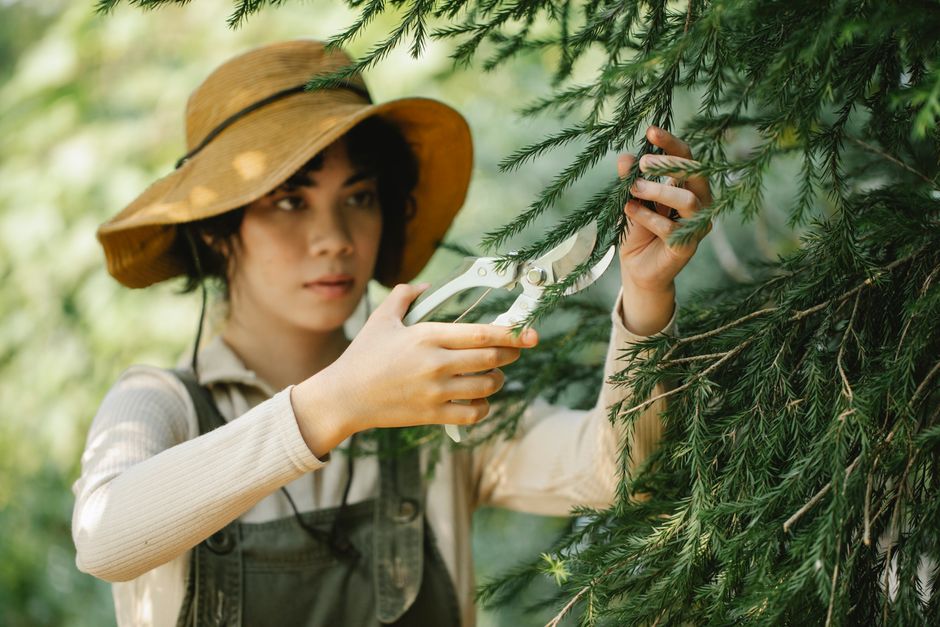
Insider tips for pruning mature trees by professional gardeners
Pruning a mature tree is not the same as tidying up a young sapling. The stakes are higher, the cuts matter more, and one bad decision can echo through the canopy for years. That is exactly why insider tips for pruning mature trees by professional gardeners are so useful: they help you understand not just how to trim, but how to preserve strength, shape, and long-term health.
If you have ever stood beneath an established tree and thought, "Where on earth do I even begin?", you are in good company. Mature trees can look sturdy and forgiving, but they are often more sensitive than they appear. A careful cut can improve light, airflow, and structure. A heavy-handed one can trigger stress, decay, or messy regrowth. Let's face it, no one wants a tree that looks butchered in February and lopsided by June.
This guide walks through the practical side of pruning mature trees in a way that professional gardeners actually approach it: with planning, restraint, and an eye on what the tree will look like next season, not just next weekend. You will learn when pruning makes sense, how the process works, what mistakes to avoid, and how to tell when the job is better left to a qualified team. If you are also reviewing wider seasonal care, it can help to understand how tree work fits alongside ongoing garden maintenance and other larger garden projects.
Table of Contents
- Why pruning mature trees matters
- How pruning mature trees works
- Key benefits and practical advantages
- Who this is for and when it makes sense
- Step-by-step guidance
- Expert tips for better results
- Common mistakes to avoid
- Tools, resources and recommendations
- Law, compliance, standards and best practice
- Options, methods, or comparison table
- Case study or real-world example
- Practical checklist
- Conclusion
- Frequently asked questions
Why Insider tips for pruning mature trees by professional gardeners Matters
Mature trees are living structures, not garden furniture. They add shade, character, habitat, privacy, and real value to a landscape, but they also carry weight in every sense. As a tree grows, its branches, bark, and root system all adapt to support that size. Pruning affects that balance.
Professional gardeners look at mature tree pruning as a form of risk management as much as plant care. You are not simply removing "extra" branches. You are deciding where future growth should go, how wind will move through the crown, how much light reaches the garden, and whether the tree can heal cleanly after the cut.
That matters because older trees tend to respond more slowly than younger ones. They may take longer to compartmentalise wounds, and they can react badly to over-pruning. A tree that has been stripped back too hard often sends out weak regrowth, which sounds like recovery but usually is not. It is the tree trying to survive, not thrive.
There is also the practical side. Branches over roofs, driveways, patios, paths, and boundaries can create very different priorities. A small reduction near a garden room is a very different job from thinning a broad oak in an open lawn. If you are coordinating tree work with wider site clearance, the scope may overlap with garden clearance or even a broader services overview when several parts of the garden need attention at once.
Expert summary: Mature tree pruning should protect structure first, shape second, and appearance third. If the order feels backwards, the job usually goes backwards too.
How Insider tips for pruning mature trees by professional gardeners Works
Professional pruning is guided by the tree, not by habit. The process starts with observation: species, age, canopy density, deadwood, crossing branches, previous cuts, signs of decay, and the tree's relationship to nearby structures. A professional gardener will usually ask, "What is this tree trying to do, and what do we want it to do instead?" That small question changes the whole approach.
Most mature tree pruning falls into a few broad categories:
- Deadwood removal to reduce risk and tidy the crown.
- Selective thinning to let more light and air pass through without stripping the tree bare.
- Crown lifting to increase clearance under lower limbs.
- Reduction pruning to shorten selected branches and ease weight or spread.
- Formative correction for structural problems that developed over time.
The trick is that these are not interchangeable. A reduction cut is not the same as a tidy-up cut. A thinning cut is not a "lop everything to the same height" job. In fact, indiscriminate cutting is one of the fastest ways to create weak regrowth and an awkward silhouette.
Professionals also consider timing. Different species tolerate pruning differently, and the wrong season can mean excessive sap flow, slower recovery, or more exposure to pests and disease. A mild winter morning can be perfect for some trees, while others are better left until active growth slows or specific flowering periods have passed. There is no one-size-fits-all answer, annoying as that may be.
On a real job, the gardener is usually thinking several steps ahead. If a branch is removed now, what will the canopy do in six months? Will the tree become top-heavy? Will sunlight suddenly scorch plants below? Will the shape look balanced from the house and the street? Those are the practical questions that turn pruning from guesswork into good horticulture.
Key Benefits and Practical Advantages
When mature trees are pruned well, the benefits are noticeable quickly and continue for years. Some are obvious. Others show up quietly in how the tree and garden behave over time.
- Better tree health: Removing dead, damaged, or rubbing growth can reduce entry points for decay and improve general vigour.
- Improved structure: Thoughtful cuts support a stronger framework, especially where older limbs have become unbalanced.
- More light and airflow: This can help the garden below, particularly lawns, borders, and shaded seating areas.
- Lower risk: Reducing weak or overextended branches can help limit the chance of failure in windy weather.
- Cleaner appearance: A well-pruned mature tree looks intentional, not hacked about.
- Better coexistence with the rest of the garden: Trees should work with paths, patios, hedges, and planting, not dominate them.
There is also a subtle but important emotional benefit: a mature tree that looks cared for makes the whole garden feel settled. You notice it on damp mornings when the branches are still and the garden is quiet. It just feels more looked after.
For clients planning a more complete refresh, pruning often pairs well with landscape gardening or landscaping work, especially where tree shade has changed the layout or planting conditions over time.
Who This Is For and When It Makes Sense
Mature tree pruning makes sense for homeowners, landlords, property managers, and anyone responsible for an established garden. It is especially relevant if you have trees close to boundaries, near buildings, or growing over spaces where people regularly walk, park, or sit.
It also makes sense if the tree has started to:
- block too much light
- drop deadwood regularly
- lean or spread unevenly
- rub against roofs or guttering
- crowd other plants
- show crossing or congested branches
Not every mature tree needs pruning every year. Some benefit from occasional light intervention. Others are better left alone unless there is a clear reason to act. Truth be told, one of the hardest lessons for new gardeners is that the best pruning sometimes is very little pruning.
If the tree is protected, old, historically significant, or in a sensitive location, the decision becomes more careful. And if the tree looks unsafe, diseased, or structurally compromised, pruning may not even be the right answer. In those cases, a specialist review is usually wiser than a quick trim. For higher-risk situations, it may be appropriate to look at tree lopping and removal options rather than assuming pruning alone will solve the issue.
Step-by-Step Guidance
This is the practical bit. If you want a professional approach, start by thinking like one. Not by grabbing the saw. Not yet.
1. Assess the tree from a distance first
Stand back and look at the whole shape. Notice the crown spread, dominant stems, dead branches, obvious damage, and how the tree sits in the garden. A small defect near the trunk can matter more than a large limb high up. Professionals always read the whole tree before choosing a cut.
2. Identify the purpose of the pruning
Ask why you are pruning. Is it for safety, light, clearance, structure, or recovery after storm damage? If you cannot answer that clearly, stop. The purpose controls the method. Without purpose, pruning turns into cosmetic tinkering, which mature trees do not need.
3. Check the species and its growth pattern
Different trees respond differently. Some tolerate selective pruning well. Others resent heavy reduction and respond with dense, awkward regrowth. A professional gardener will adapt technique to the species rather than forcing a generic process onto every tree.
4. Remove dead, damaged, or diseased wood first
This is usually the safest starting point. Deadwood can snap, shed, or conceal problems. Remove it carefully and cleanly. If you spot signs of decay deeper in the structure, do not assume pruning alone can sort it out. Sometimes the issue is more serious.
5. Thin or reduce selectively
Work branch by branch. Keep the natural outline in mind. Make cuts back to appropriate growth points, not random stubs. A clean, well-placed cut helps the tree seal properly; a bad one invites trouble. Simple enough, but easy to get wrong in a hurry.
6. Keep the branch arrangement balanced
Step back regularly. This is where many DIY jobs drift off course. You prune one side, then overcorrect the other, and suddenly the tree looks as if a storm has been through. Pause. Reassess. Then cut again only if the shape still makes sense.
7. Avoid over-pruning in one session
Heavy cuts can shock a mature tree. A measured reduction is usually better than a dramatic one. If a tree needs substantial reshaping, it may be wiser to stage the work over more than one visit. That feels slower, but often it is the safer long-term choice.
8. Tidy the site and inspect the result
Clear away debris, check for any unstable stubs, and look at the tree from several angles. View it from the house, the path, and the lawn. A tree that looks acceptable from one side may be oddly weighted from another. This last check is oddly revealing.
Expert Tips for Better Results
Here are the small, practical details that often separate a decent pruning job from a genuinely good one.
- Prune with the tree's future shape in mind. Mature trees are slow to forgive repeated bad decisions, so choose cuts that will age well.
- Work from the outside in. Start with deadwood and obvious defects before worrying about appearance.
- Do not chase symmetry at all costs. Natural trees are rarely perfectly symmetrical, and forcing them to be can create unnatural stress points.
- Use clean, sharp tools. Ragged cuts heal less neatly and are harder to judge accurately.
- Respect the branch collar. That slightly swollen area where a branch meets the trunk is part of the tree's defence system. Cutting too flush or too stubby can both cause problems.
- Take a tea break and look again. Seriously. A five-minute pause can stop a bad extra cut. Happens all the time.
One of the best insider habits is to prune less than your first instinct suggests. That sounds timid, but in mature tree work restraint is often the mark of confidence, not hesitation. If a branch seems questionable, consider whether it genuinely needs removal or just a lighter reduction.
Another useful habit is to prune in relation to the surroundings. A branch over a flower bed can sometimes be reduced rather than removed, preserving canopy and light balance at the same time. This is where experienced gardeners really earn their keep. They are not just cutting wood; they are managing the whole garden picture.
Common Mistakes to Avoid
Most pruning mistakes are not dramatic. They are small, repeated, and very human. But in a mature tree, those little errors add up fast.
- Topping the tree: Cutting back large limbs to random points leaves weak regrowth and a poor structure.
- Removing too much at once: Stripping out too much canopy can weaken the tree and reduce its ability to recover.
- Leaving long stubs: Stubs do not heal well and can invite decay.
- Cutting at the wrong time: Timing matters more than many people think, especially for flowering or sap-sensitive species.
- Ignoring hidden decay: A hollow-sounding limb or cracked junction deserves attention, not optimism.
- Using blunt tools: This is a classic. If the saw fights you, the tree usually loses.
One more mistake worth mentioning: pruning only for the view from the window. Yes, that view matters. But the tree lives in three dimensions, not as a flat picture. A cut that improves the sightline may create an awkward balance or loading issue elsewhere. That is the sort of thing you do not notice until the next windy spell.
Tools, Resources and Recommendations
You do not need a van full of kit to understand mature tree pruning, but the right tools make a genuine difference. Professionals usually rely on equipment that gives a clean, controlled cut and lets them work safely from stable positions.
| Tool or resource | Typical use | Why it matters |
|---|---|---|
| Hand secateurs | Small shoots and thin growth | Clean, precise cuts for minor work |
| Long-handled loppers | Medium branches | More leverage without forcing the cut |
| Pruning saw | Thicker branches | Controlled removal with less tearing |
| Sturdy ladder or access equipment | Reaching upper areas | Stability and safer working position |
| Protective gloves and eye protection | General pruning safety | Basic protection from chips, thorns, and slips |
| Waste handling and disposal plan | Clearing arisings | Keeps the site tidy and prevents trip hazards |
If the tree work is part of a broader tidy-up, it can be practical to schedule it alongside garden maintenance or even lawn mowing so the whole outside space feels finished rather than half-done. Small thing, but it changes how the garden feels when you step into it.
For larger jobs, check whether the team has a clear approach to safety, access, and disposal. It is sensible to ask about insurance and safety and to review any relevant health and safety policy if you are comparing providers. Nobody enjoys paperwork, but it matters when a tall tree and a hard surface are involved.
Law, Compliance, Standards, or Best Practice
Tree work can sit in a grey area between garden care and regulated site management, so caution is wise. In the UK, mature trees may be affected by preservation status, conservation area controls, ownership boundaries, access rights, or site-specific restrictions. If a tree is near a boundary, overhanging a neighbour's property, or visible from a public space, it is sensible to check before any major work begins.
Professional gardeners normally work to accepted best practice rather than improvising. That means assessing risk first, planning access, using suitable equipment, and avoiding unnecessary harm to the tree. It also means being honest about limits. If a tree is structurally compromised, heavily diseased, or needs work beyond standard pruning, it may be safer to escalate rather than "have a go".
Where tree waste is generated, responsible handling matters too. Disposal, recycling, and site cleanliness are part of good practice, not an afterthought. If sustainability is important to you, it is worth asking how cuttings and green waste are managed, and whether the approach fits your expectations. Some garden teams also publish their approach to recycling and sustainability, which is a useful sign of how they think about the wider job.
If you are unsure whether the work is straightforward, a brief professional assessment is usually the safest next step. There is no prize for guessing incorrectly, and mature trees are not the place for guesswork. To be fair, they really are not.
Options, Methods, or Comparison Table
Different pruning approaches suit different objectives. Here is a simple comparison that helps clarify the choice.
| Method | Best for | Strengths | Watch-outs |
|---|---|---|---|
| Deadwood removal | Safety and tidy-up | Low-impact, clear benefit | Does not correct poor structure on its own |
| Selective thinning | Light, airflow, canopy balance | Preserves the natural shape | Easy to overdo if you remove too many branches |
| Crown lifting | Access under the tree | Improves clearance and movement below | Can make the upper canopy look top-heavy if done badly |
| Reduction pruning | Size control and load reduction | Manages spread without complete removal | Needs careful placement to avoid ugly regrowth |
| Severe cutting or topping | Usually not recommended | Quick apparent reduction | Weak structure, stress, and poor long-term form |
For most mature trees, selective thinning or modest reduction is usually preferable to dramatic cutting. If the crown is very congested, a measured, phased plan often produces better results than one big intervention. Slow can be good. In tree work, slow is often smart.
Case Study or Real-World Example
Imagine a mature tree in a typical British front garden: tall enough to cast afternoon shade across the drive, broad enough to brush the neighbour's side boundary, and old enough that previous cuts have left a few awkward scars. The owner wants more light, but does not want the tree to look hacked back.
A professional gardener would usually begin by removing deadwood and crossing branches, then assessing where the canopy is carrying too much weight. Instead of flattening the top, they might reduce selected outer limbs, lift lower branches just enough for clearance, and leave the healthiest parts of the crown intact. The result is often subtle. Not flashy. But the tree looks lighter, the garden gets more daylight, and the shape still feels mature and settled.
What tends to surprise people is how much difference a careful prune can make without changing the tree's identity. The tree is still there. It still feels like the same feature. It just sits more comfortably in the space.
That is the sweet spot, really.
Practical Checklist
Use this quick checklist before any pruning session on a mature tree.
- Confirm the reason for pruning is clear.
- Check the tree's overall condition from a distance.
- Look for dead, damaged, or rubbing branches.
- Consider species, season, and recent weather.
- Decide whether the job is light maintenance or a more technical intervention.
- Make sure access is safe and stable.
- Use clean, suitable tools.
- Remove only what genuinely needs to come off.
- Step back frequently to reassess shape and balance.
- Plan how cuttings will be cleared and disposed of.
- Stop if the tree shows signs of decay, instability, or unexpected stress.
- Book professional help if the work is above ground level, near hazards, or outside your comfort zone.
If you are coordinating this with wider garden work, it can help to review related options such as hedge trimming or broader garden improvements like landscape gardening so the whole site is planned in one go rather than patched together bit by bit.
Conclusion
Pruning mature trees well is less about cutting and more about judgement. You are balancing safety, health, shape, and the character of the tree itself. That is why professional gardeners take their time, read the structure carefully, and avoid the temptation to overdo it. The best work often looks calm, almost invisible, which is exactly the point.
If you remember only one thing, make it this: mature trees reward restraint. They do not need drama. They need thoughtful cuts, good timing, and a steady hand. When you get that right, the whole garden benefits, not just the tree. And that quiet improvement, the one you notice on a breezy afternoon when the light sits better and the canopy feels balanced, is usually worth the effort.
Get a free quote today and see how much you can save.
Frequently Asked Questions
What is the best time of year to prune a mature tree?
It depends on the species, the tree's condition, and the goal of the work. Many mature trees are best pruned during dormancy or at a time that reduces stress and bleeding, but flowering and sap-sensitive species need more specific timing. A professional gardener will usually check the tree first rather than choosing a date by habit.
How much of a mature tree can be pruned safely?
There is no universal percentage that fits every tree. The safer approach is to remove only what is necessary and avoid excessive canopy loss in one session. Mature trees are slower to recover, so restraint usually produces better long-term results.
Can I prune a mature tree myself?
Light pruning at reachable height may be manageable for confident gardeners, but mature trees often involve height, weight, access, and structural judgement. If the tree is large, overhangs buildings, or shows signs of decay, it is wiser to get professional help.
What is the difference between pruning and lopping?
Pruning is selective and considered, with the tree's long-term health in mind. Lopping is a more informal term that often suggests heavy or indiscriminate cutting. In practice, professional gardeners try to avoid rough cutting because it can damage structure and trigger weak regrowth.
Will pruning a mature tree make it grow back faster?
Sometimes it will respond with vigorous regrowth, but that is not always a good thing. Fast regrowth after heavy cutting is often the tree's reaction to stress. The goal is controlled, healthy growth rather than a rush of weak shoots.
How do I know if a mature tree is unsafe?
Warning signs can include major dead limbs, visible cracks, hollow areas, sudden leaning, lifting roots, or branches that move strangely in the wind. If you are unsure, do not guess. A professional assessment is the sensible route.
Does pruning help more light reach the garden?
Yes, selective thinning and careful reduction can improve light levels underneath and around the tree. The key is not to over-thin the canopy, because that can change the tree's balance and appearance.
What tools are usually needed for mature tree pruning?
Common tools include secateurs, loppers, pruning saws, protective gloves, and eye protection. For taller or more complex trees, access equipment and proper safety planning become much more important than the cutting tools themselves.
Can pruning damage an old tree?
Yes, if it is done too heavily, at the wrong time, or with poor cutting technique. Mature trees are more vulnerable to stress and slow healing, so careful planning matters more than speed.
Should I book pruning and garden clean-up together?
Often, yes. Combining pruning with wider garden work can be more efficient and leave the space looking finished rather than half-tidy. If the garden needs several jobs at once, it may be worth looking at garden clearance or scheduling a broader maintenance visit.
What if the tree is near a building or boundary?
That is exactly when care matters most. Trees near roofs, fences, paths, or neighbouring land need careful judgement and, in some cases, checks before work begins. A professional gardener will normally assess access, risk, and the likely impact of the cut before proceeding.
Where can I learn more about the company behind these services?
If you want to understand the team's approach, standards, and wider service style, it is sensible to review the about us page and the main services overview. That gives you a clearer picture of how tree work fits into the broader garden service offering.